
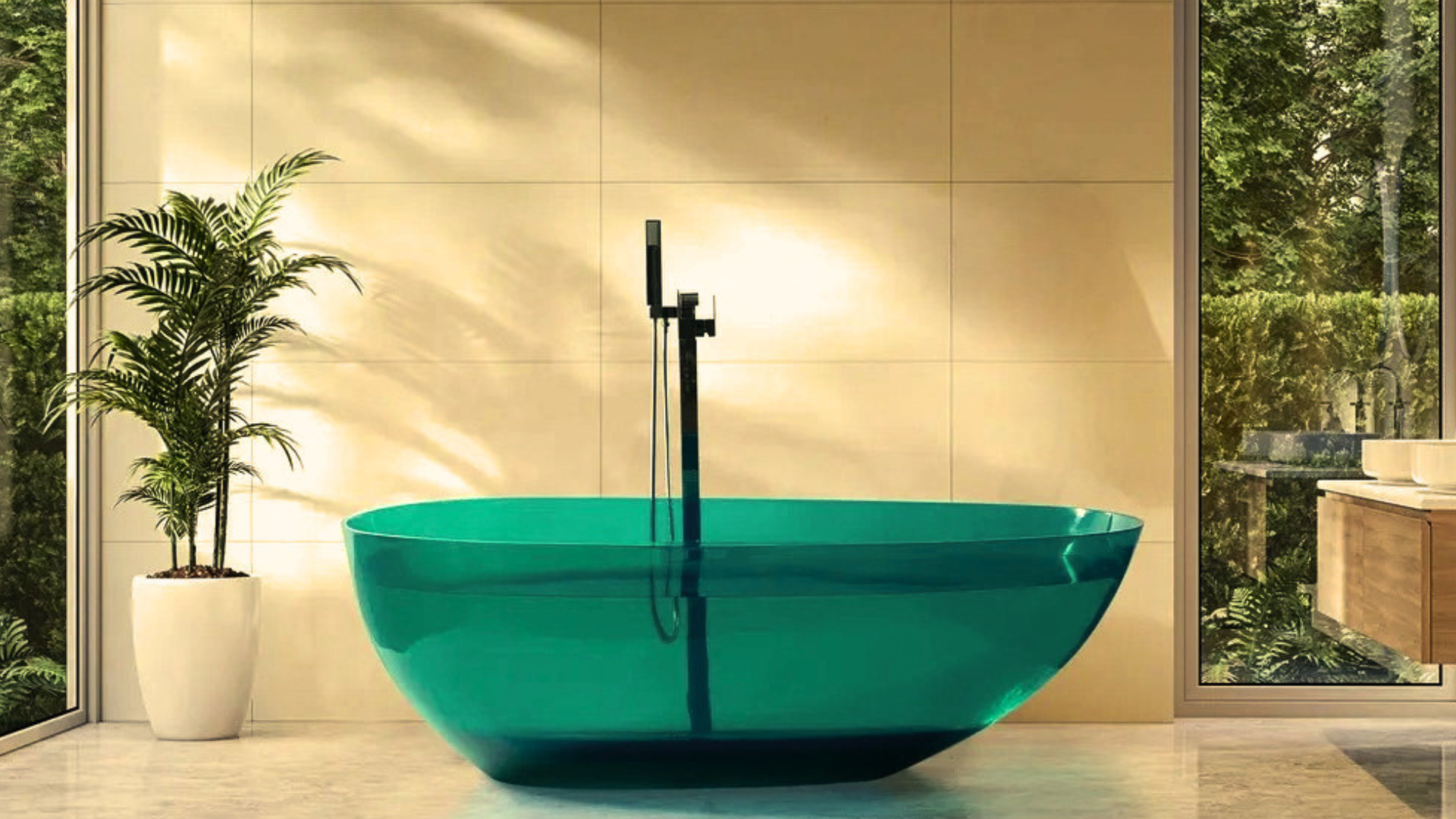
Few bathroom decisions carry as much visual impact as the choice of bath. Whether you’re planning a full renovation or a partial refurb, simply reconsidering your options, deciding between a standard built-in bath and a freestanding model is one of the biggest calls you’ll make. Both have genuine strengths, and the right choice depends heavily on your space, your budget, and the look you’re going for.
What’s the Difference?
A standard (or “built-in”) bath is designed to be fitted against a wall, typically panelled on the front and sometimes on one or both ends, and often set into an alcove between two walls. A freestanding bath, by contrast, stands independently in the room, with all sides fully finished, meaning it can be positioned anywhere the plumbing allows, including in the middle of the room, angled in a corner, or as a striking centrepiece beneath a window.
The Case for a Standard Bath
Space efficiency. Built-in baths are the most practical choice for smaller bathrooms. Fitting neatly into an alcove or against a wall, they make the most of limited floor space and leave more room for other fixtures like a separate shower, vanity unit, or storage.
Cost-effective installation. Because they sit against existing walls, standard baths are generally simpler and cheaper to plumb in. Pipework can often be concealed behind the panel rather than requiring more elaborate below-floor or wall-chasing work, which keeps both material and labour costs down.
Practicality with showers. If you want a bath with an overhead shower, a standard bath is far easier to fit with a shower screen or curtain, since the surrounding walls provide a natural boundary to keep water contained. This makes it the more functional option for households that use the bath as a daily shower as much as a soak.
Storage and shelving. The walls flanking a built-in bath offer a natural spot for recessed shelving, shower caddies, or simple ledges for toiletries, something a freestanding bath can’t easily replicate without additional furniture.
Family-friendly. For homes with young children, a standard bath’s enclosed sides can make bath time safer and easier to manage, offering a barrier that helps contain splashing and gives a secure edge for supervising little ones.
The Case for a Freestanding Bath
Striking visual impact. There’s no getting around it, freestanding baths simply look more luxurious. Their sculptural shape makes them a genuine design statement, often becoming the focal point of the entire bathroom.
Design flexibility. Because they aren’t tied to a wall, freestanding baths can be positioned almost anywhere, allowing for far more creative bathroom layouts. A bath beneath a window, angled to catch a view, or placed centrally in a large room, is only possible with a freestanding design.
A wide range of styles. From classic roll-top and clawfoot designs to sleek, minimalist stone-resin ovals, freestanding baths come in a huge variety of shapes and finishes, offering more scope to match a specific aesthetic, whether that’s traditional, contemporary, or somewhere in between.
A dedicated soaking experience. Freestanding baths are often deeper and more generously proportioned than standard baths, designed primarily for relaxing soaks rather than dual-purpose showering. For anyone prioritising a spa-like bathing experience, this is a significant draw.
Easier to clean around. With access on all sides, cleaning both the bath itself and the floor around it is often easier than manoeuvring around a boxed-in panel.
What to Consider Before You Choose
A few practical factors are worth weighing carefully before committing:
- Plumbing costs. Freestanding baths generally need pipework routed to the centre of the room or to a specific point, which can mean more significant (and costly) alterations, particularly in a retrofit rather than a new build.
- Floor space. Freestanding baths need more clearance around them to be usable and to look right, so they suit larger bathrooms better than tight, boxy ones.
- Weight. Depending on the material, some freestanding baths, particularly cast iron or stone resin models, are considerably heavier than standard acrylic baths, which may require checking your floor’s load-bearing capacity, especially upstairs.
- Showering needs. If a shower-over-bath is essential to your daily routine, think carefully about how you’ll manage screening and splashback with a freestanding design.
The Bottom Line
There’s no universally “better” option, only the better option for your space and lifestyle. A standard bath remains the smart, practical choice for smaller bathrooms, tighter budgets, and households that rely on the bath doubling as a shower. A freestanding bath, meanwhile, delivers real design drama and a more indulgent bathing experience, provided you have the space and budget to do it justice. Many homeowners find the decision comes down to a simple question: are you optimising for everyday practicality or for the bathroom you’ve always dreamed of?